Selection Criteria
The following publications were selected based on a combination of:
- Scientific Credibility – Editorial oversight, peer-review integration, expert contributors, and institutional reputation.
- Influence and Reach – Global readership, website traffic, social media engagement, educational adoption, and citation influence.
- Editorial Quality – Depth of reporting, investigative journalism, visual presentation, and accessibility.
- Innovation in Content Delivery – Podcasts, multimedia storytelling, interactive graphics, AI-assisted content discovery, and mobile-first experiences.
- Coverage of Emerging Fields – Artificial intelligence, quantum computing, biotechnology, climate science, sustainability, and space exploration.
- Global Representation – Publications from North America, Europe, Asia-Pacific, and multilingual markets.
- Print and Digital Strength – Ability to maintain influence across both traditional and digital channels.
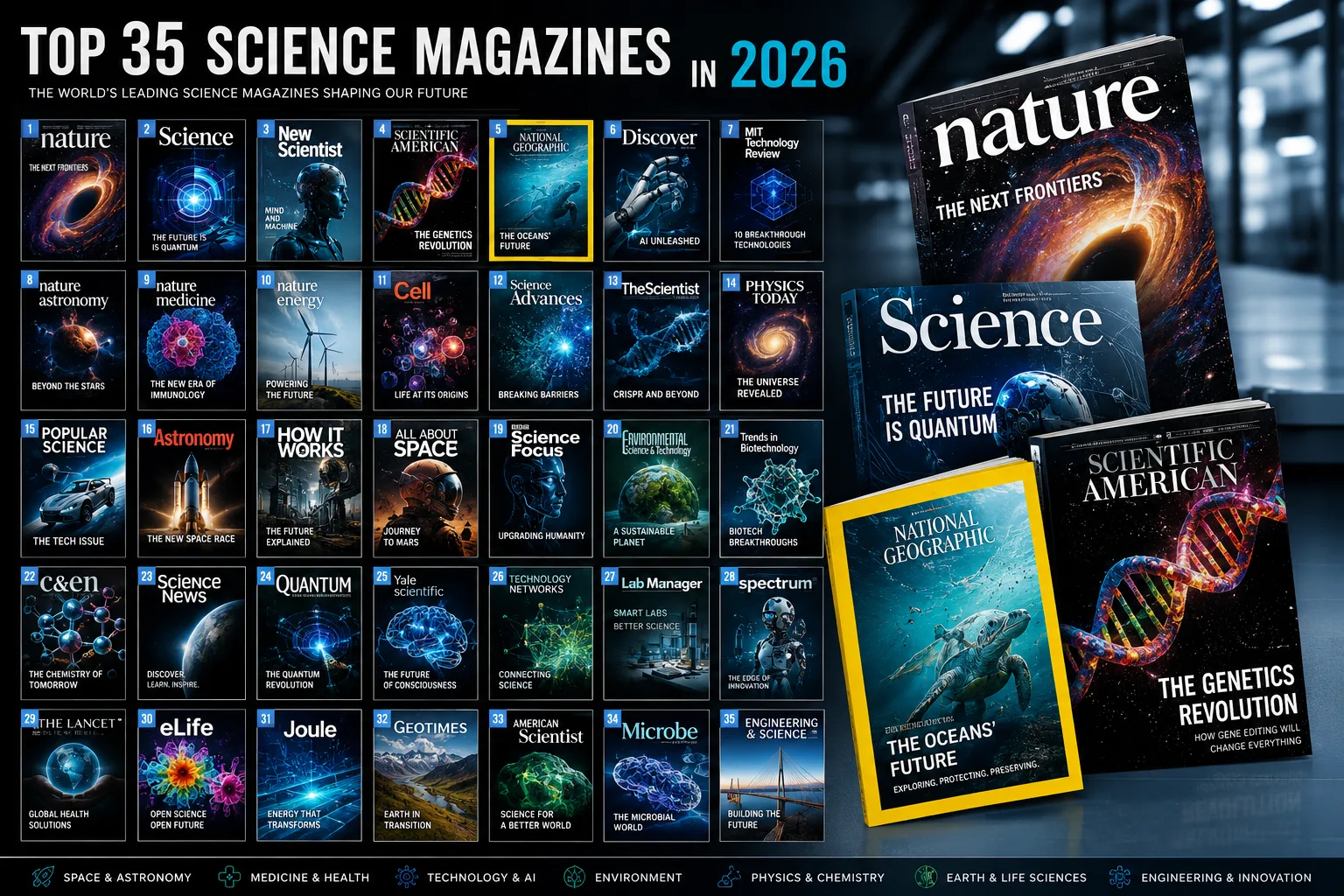
Top 35 Science Magazines for 2026
| Rank | Magazine | Primary Focus | Region |
|---|---|---|---|
| 1 | Scientific American | General Science | USA |
| 2 | Nature | Multidisciplinary Science | UK |
| 3 | New Scientist | General Science & Technology | UK |
| 4 | Science | Scientific Research | USA |
| 5 | National Geographic | Earth & Natural Science | USA |
| 6 | Discover | General Science | USA |
| 7 | BBC Science Focus | General Science | UK |
| 8 | Smithsonian Magazine | Science & History | USA |
| 9 | American Scientist | Research & Science Communication | USA |
| 10 | Physics World | Physics | UK |
| Rank | Magazine | Primary Focus | Region |
|---|---|---|---|
| 11 | Sky & Telescope | Astronomy | USA |
| 12 | Astronomy | Astronomy & Space | USA |
| 13 | Physics Today | Physics Research | USA |
| 14 | Chemical & Engineering News | Chemistry | USA |
| 15 | BioTechniques | Biotechnology | Global |
| 16 | The Scientist | Biology & Medicine | USA |
| 17 | Genome Technology | Genetics & Genomics | Global |
| 18 | Oceanographic | Marine Science | UK |
| 19 | Earth Magazine | Earth Science | USA |
| 20 | Geographical | Environment & Geography | UK |
| Rank | Magazine | Primary Focus | Region |
|---|---|---|---|
| 21 | Eos | Earth & Climate Science | USA |
| 22 | Environmental Science & Technology | Environmental Science | USA |
| 23 | Frontiers for Young Minds | Science Education | Switzerland |
| 24 | Knowable Magazine | Research Journalism | USA |
| 25 | Cosmos | General Science | Australia |
| 26 | Science News | Science Journalism | USA |
| 27 | Science Illustrated | Visual Science | International |
| 28 | Horizons | EU Research & Innovation | Europe |
| 29 | Research Outreach | Academic Research | UK |
| 30 | Asian Scientist Magazine | Asian Research | Singapore |
| Rank | Magazine | Primary Focus | Region |
|---|---|---|---|
| 31 | Nikkei Science | General Science | Japan |
| 32 | Pour la Science | General Science | France |
| 33 | Spektrum der Wissenschaft | General Science | Germany |
| 34 | La Recherche | Scientific Research | France |
| 35 | China National Geography | Earth & Environmental Science | China |
Subject Coverage Breakdown
General Science Leaders
The most influential broad-coverage science magazines expected to dominate 2026 include:
- Scientific American
- New Scientist
- Discover
- Science News
- Cosmos
These publications excel at translating complex research into accessible content for both professionals and educated general audiences.
Physics and Astronomy
Leading titles in physical sciences include:
- Physics World
- Physics Today
- Astronomy
- Sky & Telescope
Major 2026 themes:
- Quantum technologies
- Fusion energy
- Dark matter research
- Lunar exploration
- Mars missions
- Commercial spaceflight
Life Sciences and Biotechnology
Top publications include:
- The Scientist
- BioTechniques
- Genome Technology
Dominant topics:
- CRISPR advancements
- Precision medicine
- Synthetic biology
- AI-driven drug discovery
- Longevity science
Environmental and Earth Sciences
Key publications:
- National Geographic
- Eos
- Environmental Science & Technology
- Oceanographic
Focus areas:
- Climate adaptation
- Carbon capture
- Biodiversity protection
- Ocean conservation
- Renewable energy systems
Geographic and Language Diversity
North America
Strongest representation through:
- Scientific American
- Science
- Discover
- Smithsonian Magazine
- Science News
Europe
Major leaders include:
- Nature (UK)
- New Scientist (UK)
- Physics World (UK)
- Horizons (EU)
- Spektrum der Wissenschaft (Germany)
Asia-Pacific
Growing influence from:
- Asian Scientist Magazine (Singapore)
- Nikkei Science (Japan)
- China National Geography (China)
- Cosmos (Australia)
Multilingual Scientific Communication
Notable non-English leaders:
- Pour la Science (French)
- La Recherche (French)
- Spektrum der Wissenschaft (German)
- Nikkei Science (Japanese)
Digital vs Print Influence in 2026
Digital-First Leaders
These publications are expected to derive most influence from digital audiences:
- Nature
- Science
- New Scientist
- Science News
- Knowable Magazine
- Horizons
Key features:
- AI-powered content recommendations
- Interactive data visualizations
- Podcasts and video explainers
- Mobile-first publishing
Strong Hybrid Print + Digital Models
- Scientific American
- National Geographic
- Discover
- Astronomy
- Physics World
These brands continue to maintain premium print editions while expanding digital subscriptions.
Emerging Scientific Publishing Trends for 2026
Artificial Intelligence in Science
Most active coverage:
- Nature
- Science
- Scientific American
- New Scientist
Topics include:
- AI research assistants
- Machine-learning-driven discoveries
- AI ethics
- Scientific automation
Space Exploration Boom
Leading magazines:
- Astronomy
- Sky & Telescope
- National Geographic
- Physics World
Coverage focuses on:
- Artemis lunar missions
- Mars exploration
- Private space companies
- Space telescopes
Sustainability and Climate Research
Most influential titles:
- National Geographic
- Eos
- Environmental Science & Technology
- Oceanographic
Key themes:
- Net-zero transitions
- Biodiversity restoration
- Climate resilience
- Sustainable technologies
Influence Metrics Snapshot (2026 Outlook)
| Publication Tier | Estimated Global Reach |
|---|---|
| Scientific American | Millions of monthly readers |
| Nature | Tens of millions of annual users across platforms |
| New Scientist | Millions of monthly digital readers |
| Science | Global research community audience |
| National Geographic | Tens of millions across print and digital |
| Science News | Large educational and professional readership |
| Physics World | Hundreds of thousands of professionals |
| Astronomy | Hundreds of thousands of enthusiasts and researchers |
Outlook for 2026
The science magazine landscape in 2026 is expected to be dominated by a combination of legacy institutions and digitally innovative publishers. While research-centered brands such as Nature and Science remain the most authoritative sources of scientific developments, publications such as Scientific American, New Scientist, and National Geographic continue to shape public understanding of science globally. Their ability to combine rigorous reporting, multimedia storytelling, AI-enhanced content delivery, and coverage of emerging fields positions them as the most influential science magazines heading into 2026.